
Introduction
Successful root canal treatment depends on cleaning, shaping, and obturating the canal system within the correct limits. Instrumentation beyond the apical constriction may cause periapical irritation, postoperative pain, and delayed healing, whereas inadequate working length can leave infected tissue and microorganisms within the canal.
Working length determination is therefore not merely a procedural step but a critical factor that influences the long-term success of endodontic therapy.
What is Working Length?
Working length is defined as:
The distance from a reproducible coronal reference point to the point where canal preparation and obturation should terminate.
Ideally, this endpoint corresponds to the apical constriction, which is usually located approximately 0.5–1 mm short of the apical foramen.
However, the position of the apical constriction is variable and cannot be visualized directly during treatment, making working length determination a clinical challenge.
Why Accurate Working Length Matters
Accurate working length helps:
- Remove infected pulp tissue effectively.
- Prevent overinstrumentation of periapical tissues.
- Reduce postoperative pain.
- Improve the quality of obturation.
- Increase the long-term success rate of root canal treatment.
Both overestimation and underestimation can compromise treatment outcomes.
Methods of Working Length Determination
1. Radiographic Method
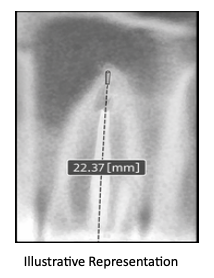
Radiographs remain one of the most widely used methods for estimating working length.
The clinician inserts a file into the canal and takes an intraoral periapical radiograph to assess the position of the instrument relative to the radiographic apex.
Advantages
- Widely available.
- Provides information about root morphology.
- Helps identify curvature and anatomical variations.
Limitations
- Two-dimensional image of a three-dimensional structure.
- Superimposition of anatomical structures.
- Radiographic apex does not always correspond to the apical constriction.
- Exposure to ionizing radiation.
For these reasons, radiographs are often combined with electronic apex locators for greater accuracy.
2. Electronic Apex Locator (EAL)
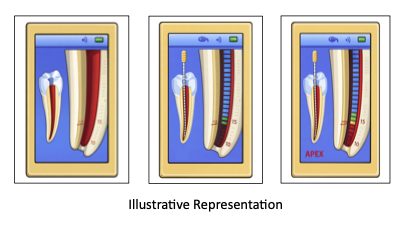
Electronic apex locators determine the position of the file within the canal by measuring electrical properties between the file and oral tissues.
Modern apex locators are highly accurate and are considered an essential component of contemporary endodontic practice.
Advantages
- High accuracy.
- Reduces the number of radiographs required.
- Useful in patients where radiographs are difficult to obtain.
- Real-time measurement during instrumentation.
Limitations
Accuracy may be affected by:
- Root perforations.
- Large open apices.
- Presence of metallic restorations.
- Certain irrigating solutions in older devices.
Current evidence suggests that the best results are obtained when EAL findings are confirmed radiographically.
3. Tactile Method
The tactile method relies on the clinician’s ability to feel resistance as the instrument approaches the apical constriction.
Although experienced operators may use tactile sensation as an adjunct, it should not be considered a reliable standalone technique.
Limitations
- Highly subjective.
- Difficult in curved canals.
- Unreliable in narrow or calcified canals.
- Dependent on operator experience.
Common Clinical Errors
Several mistakes may lead to inaccurate working length determination:
1. Using only a radiograph
Radiographs provide an estimate but do not precisely locate the apical constriction.
2. Ignoring changes after coronal flaring
Coronal preflaring may alter working length. Reconfirmation after flaring is often recommended.
3. Using inconsistent reference points
Changing the reference point between appointments can produce inaccurate measurements. Choose a stable coronal landmark and use it consistently.
4. Blindly trusting the apex locator
Electronic readings should always be interpreted in conjunction with:
- Clinical findings
- Canal anatomy
- Radiographic evaluation
Clinical Pearls
✓ Use a combination of Electronic Apex Locator + Radiograph whenever possible.
✓ Establish a reproducible coronal reference point before measuring.
✓ Reconfirm working length after coronal flaring.
✓ Be cautious in teeth with:
- Open apices
- Root resorption
- Perforations
- Immature roots
Key Takeaway
Working length determination is not a single measurement but a process of integrating radiographic findings, electronic measurements, and clinical judgment.
The clinician’s goal is not merely to reach the apex but to identify the ideal apical endpoint for cleaning, shaping, and obturation.
Accurate working length remains one of the most important determinants of successful endodontic treatment.
Related Handbook
Dental Dose Clinical Handbook Volume II – Root Canal Therapy

- Working length protocols
- Apex locator interpretation
- Rotary instrumentation
- Obturation techniques
- Clinical pearls and troubleshooting
Available on the Dental Dose Store.